For more details or to schedule an interview, contact Ashley Fortier: 438-338-4591 or publish [at] metonymypress [dot] com.
About the Author
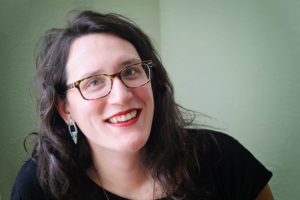
jia qing wilson-yang is a mixed race trans woman living in Toronto. She likes to write poems and stories and music. Her writing has appeared in Bound to Struggle: Where Kink and Radical Politics Meet (ed. Simon Strikeback) and Letters Lived: Radical Reflections, Revolutionary Paths (ed. Sheila Sampath), and the recent women of colour issue of Room magazine. She has recorded several acoustic albums and this one time was a drummer in a pop punk band.
About the Book
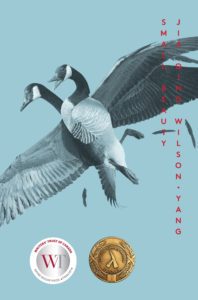
Small Beauty tells the story of Mei, a mixed race trans woman managing the death of her cousin, the ways she contorts to navigate racism and transphobia, and her desire for community as she takes an opportunity to leave the city and revisit a town from her family’s past, where she discovers queer family history while parsing through her own anger and trauma.
Cycling through time, points of view, and rural and city life, the novel introduces us to Mei’s community in fictional Dundurn and Herbertsville, loosely based on Southern Ontario places: Annette and Connie, other Asian trans women from the drop-ins; Sandy, Mei’s older cousin and constant (if aggressive) support; Diane, an older lesbian with a pick-up and secret links to Mei’s blood family; and Nelson, a presence lost before found, whose story is told in pictures sewn into a suitcase. Interspersed with one culminating night-time lake scene, the book carries us through these stories and towards their completion as the frustrating, necessary web that keeps Mei attached to the world.
Accolades
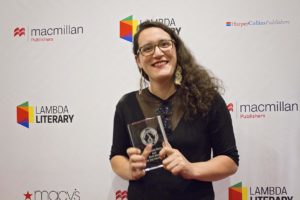
Small Beauty won the 29th Annual Lambda Literary Award for Transgender Fiction.
Small Beauty was awarded a 2016 Honour of Distinction from the Writers’ Trust of Canada’s Dayne Ogilvie Prize for LGBT Emerging writers.
In the Press
Specs
Title: Small Beauty
Author: jia qing wilson-yang
Trim size: 5.25′ x 8′
Extent: 176 pages
Season: Spring 2016
Pub date: May 13, 2016
Price: $16.95
ISBN: 9780994047120
Category: Transsexual Chinese diasporic fiction
Target Audience: Trans communities; Chinese diaspora; rural queers
Market
While trans identity gains increasing media attention, there is still a dearth of trans books that deal with themes not explicitly about transitioning. Small Beauty is the first novel by emerging author jia qing wilson-yang, who nevertheless has fans from her previous music career, and while it explores the protagonist’s transness, it also at times tenderly and at times bitterly unpacks her experiences as a mixed race person of Chinese descent, cycles of death and loss, and queer and intergenerational community. This novel explores the protagonist’s isolation at length, and then breaks it—a trajectory that will resonate with trans readers who are thirsty for their own stories on the page.
See, for comparison:
Little Fish (2018) – Casey Plett
Weekend (2016) – Jane Eaton Hamilton
Sample Interview Questions
Tell us a little bit about yourself.
My name is jia qing wilson-yang. I’m a mixed race trans woman living in Toronto. I grew up outside of Hamilton, have been moving around a whole bunch the last while, but have been living in Toronto for almost five years. I do a bunch of youth work in the city. I also spend a lot of time walking around the woods with my partner and dog in different smaller cities around Toronto. Being outside is a huge thing for me, it’s really important. In the past I’ve made a lot of music, song-writing and whatnot.
What was the inspiration for writing Small Beauty?
Part of the inspiration was wanting to describe a little bit about being a trans woman in a smaller town. A lot of the things that I’ve read about and by trans women have cities as such a huge focus. And cities are a huge focus in my life now, but they weren’t a huge focus in my life for years before that. And I wanted to have some sort of reflection of us in other places.
And I wanted to have a book that wasn’t really about being trans or coming out, but where being a trans woman was still central to what was happening in the book.
What’s the story behind the story in Small Beauty? What has the process looked like and what has it meant to you?
In the past few months that we’ve been working on it, I’ve been reading more than I have in years. And in a whole different way. I’ve been trying to find books about Chinese people in really white cities in Canada or small towns. And trying to read books about queers in small towns. And trying to read a lot of things by other trans people.
Writing this book for me has been a really great way for me to explore how my life could have potentially happened in some ways. There’s a lot of similarities with things that have happened to me and folks in my communities to things that happen to the characters in the book. While it’s not a memoir, I think taking the time to consider what a story about a mixed race trans woman in the kinds of places that I’ve lived, in the kinds of places that I’m from, would look like, has been really great. And it’s also been a really lovely process of remembering places that I’ve been in and where I’ve lived. So exploring [those places] again in a whole other way has been really helpful and a really lovely process for me. Also having a chance to write out and really look at different ways people talk about being part of a Chinese diaspora. And how that can intersect with being a trans person.
If you were going to give a one or two-minute synopsis of the story, what would that look like? Without spoilers!
Small Beauty is about Mei, a mixed race trans woman, who lives in the city but finds out her cousin has died and is deeply affected by this and goes to live in his now empty house in a smaller town just outside of the city. She spends the winter there, connecting with her cousin’s history, her own history, learning about the secret relationship her aunt had for years, learning about her mother, and reflecting on the trans women in her community in the city.
And we also start to find out about some of the trans people that have been in that town that nobody really knows about. It’s also about having your ancestors around with you, and the dead not being as far away as we think they might be.
Small Beauty is about how important it can be for a time to be self-absorbed but what that cost might be.
And about stealing boats. It’s about stealing boats.
Small Beauty’s narrative is circular. Why did you make that choice?
One of the things that was important to me in writing this book was trying to create a story that moved in and out of time in a nonlinear kind of way, where it wasn’t always clear what was happening in the moment the reader was reading it, but still have it be something that you can follow. And I also wanted to start blurring lines with it. Blurring lines between the living and the dead, because for the main character and her cousin, so many lines are blurred, so many things are hard to place. So it was important for me to reflect that feeling throughout the whole story. To try to make it comfortable, to try and make the idea of blurred lines, no sense of a clear solid place or a clear solid thing, as a comfortable thing. To give an example of something really lovely happening in that context.
Who do you hope to reach with your novel?
I hope that I reach trans woman. I hope that this is a book that other trans women can get into and relate to and see themselves reflected in some way.
I also hope that the book becomes yet another example in a growing list of examples of stories about trans people that are varied.
And I hope that it reaches people that are from the places that I’m from. Who have lived in the communities that I’ve lived in and who haven’t maybe thought about trans people who are living in their town.
I hope that it reaches folks like my parents. I hope it reaches kids in school. I hope it goes everywhere.
Press Images